Moving out on your own? Divorced? Widowed? Life changes constantly, often without warning, and we have to deal with changes we hadn't thought of. One of those major changes is usually the way we cook, or plan our meals. If you've been accustomed to preparing meals for a family, or to have meals prepared for you, this new change in your lifestyle can be a very challenging experience. If you learn to cook with the idea in mind of getting more than one meal out it, you are going to save a LOT of money staying away from fast foods, take out and dine-in restaurants. Let's try to make that transition easier with some methods and ideas on cooking for one person.
Jane Doe Cooks....
Cut recipes down or freeze meals:
I'm sure you've noticed that most recipes, whether from a cookbook or a cooking show, are designed to serve from 4 to 6 people. We need to learn how to cut that recipe down to serve one or use it effectively for future meals using your freezer. Look at the recipe and recalculate how much you need of each ingredient. 1/4 of the amount if it serves 4, 1/6 of the amount if serves 6...etc. Write it down to refer to later.
Learn how to freeze foods and meals:
Did you know that chopped onions and green peppers freeze well? Think of how much time it would save you to do up a bunch of chopped onions ready and waiting in the freezer for your next recipe. Learning what freezes well and for how long can save you money and time.
There are lots of books out there about freezer meals, and I've learned a lot the past few years with experimenting in addition to the books I've read. There is always some kind of meal in my freezer, for those nights when I am just too tired or busy to cook.
Portioning things into individual amounts, and dividing them up into tight containers or freezer bags is the trick. I make full recipes, then divide them up into one night meals in freezer containers, label them with the date and what is in there and any instructions you might need to warming them up or baking them. I use a non-permanent black marker. Be careful with it though, it wipes off easily when handling the containers. The idea is that it washes off easily for re-use of the container.
I have a page dedicated to freezing foods. Still in the works, but I'm adding to it regularly. Check it out here: Freezing Foods
How to buy foods for one:
You don't have to avoid buying things just because you think it will go to waste. Learning how to properly divide portions and freezing them for later use is a time and money saver. When you buy a bag of frozen vegetables, you get home and throw it in the freezer right? Well, if you want to use only enough for one meal you have to get the whole bag out, break the veggies up, then find a way to reseal it.
Save yourself the time and hassle. When you get home, get your quart size freezer bags out and divide that bag of veggies up into them with enough for a meal and seal them up good. Now put them in the freezer. Grab one when you need it. This is the kind of thinking you have to do if you want to save money and reduce waste.
If I go to Sam's club and buy in bulk, it's usually things like shredded cheeses, mixed veggies, and chicken breasts. I plan time to divide all of this up into individual bags and then freeze. Grab it and go when you're ready to use it. If you invest in a food saver system to seal your own packages, it's even more time saved and a money saver because it's less chance of freezer burn before using. These sealer systems take all of the air out and air is the foods worst enemy when freezing. Plan time to do this. Invite a friend for some cocktails and snacks while the two of you pack and freeze your portions.
I even buy large loaves of french breads and other breads at Sam's Club. No worry on it going stale, because I take it out of the bag, pre-slice it into the thickness I want, then put the whole thing back in the bag and into the freezer. When I want just a couple pieces of garlic bread, or dinner bread I just open the bag and take out the number of slices I need. They thaw very quickly.
Plan a cooking day for a weeks' meals:
Pick a day, or afternoon..or in my case a morning. Put that time aside without interruptions to cook your week's meals. Plan out your ingredients the night before, and if you have time, get them out (if non-perishable) and ready for the next day. Write notes, have your recipes out, even have all of your cooking utensils ready to go. I used to use my Sunday mornings to do my cooking and it worked well. If your Sundays are filled, then maybe you can get up earlier on a weekday and plan a couple of hours for cooking.
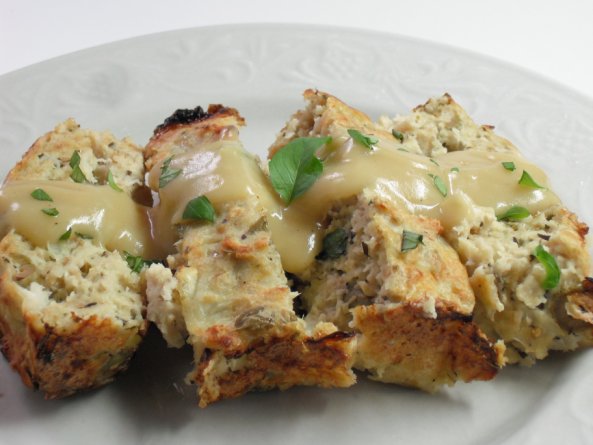
For Instance: Tomorrow morning I am making Chicken Meatloaf with Mashed Potatoes and Chicken Gravy. Tonight I have the frozen chicken breasts in a ziplock bag sitting in a bowl of cool water to thaw, along with a jar of Chicken Stock I had frozen from a different recipe. Thawing time will vary, so I turn it now and then to help it along. I will take it out of the water before going to bed and into the refrigerator to finish completely thawing overnight. I have my food processor ready and waiting to shred the chicken, and I have my non-perishable ingredients like bread crumbs, garlic, flour and spices on the chopping board waiting along with my recipe card/page. A bowl in the refrigerator has the number of eggs I will need, sour cream for the potatoes, and chopped onion etc. I have a pan on the stove with salted water to boil the potatoes after I peel them in the morning. Mixing bowls and utensils are ready too.
That completes a lot of the task I would have to do in the morning, just in a few spare minutes in the evening. I can get everything going and enjoy my coffee while it bakes.
Make sure you allow enough time for the actual completion of the recipe AND cooling time. You will waste energy in your refrigerator and freezer putting hot foods in them. Trying to freeze or refrigerate hot foods causes condensation in the container which leads to ice crystals on frozen foods and soggy refrigerated foods.
Organizing your foods for quick cooking:
The dollar store is your friend for non-food items! Storage containers, freezer bags, utensils, bowls, measuring cups. Everything to make your storage and organization easier with the most use of your space.
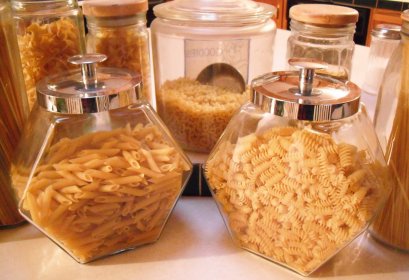
Basic pasta sauces, buy a few jars to store. You can tweak these to your liking with your own spices/herbs when you're ready to cook. It freezes very well too, freeze just enough for one serving and mark the top of the container. Tomato sauces, tomatoe paste, stewed tomatoes, and pastas are all inexpensive there too. Buy a few boxes, empty them into a covered pasta jar or container to use as needed. Keep freezer/storage bags on hand, especially the quart size, so you can freeze leftovers immediately for later. Make sure to push all of the air out before you zip them or seal them for longer freezer burn protection. And re-use those freezer bags! If you have not stored anything like chicken or meat in the bag, rinse it out thoroughly (get into the corners too!) with hot water and let it air dry for re-use. Great money saver!
Quick prep Items:
Bread Crumbs ready in an instant for crunchy, browned toppings.
To make your own, in a food processor place 4 slices of bread and whiz until crumbly fine pieces, about 30 seconds. Divide them up into quart size freezer bags, and freeze. Pull them out as you need them. They thaw very quickly. If you want to pre-brown them place them in an even layer on a baking sheet and bake at 350 degrees for about 10 minutes or till browned sufficiently.
Your Pasta sauce creation when YOU want it
Use a basic jar pasta or marinara sauce and add spices and herbs to suit your tastes, even add meat. Simmer on low heat for about 10-15 minutes to get the flavors combined. Then divide it up into single serving freezer containers, label them and freeze.
Broth, creams, sauces anytime you're in the mood in minutes
Garlic bread, french bread, dinner rolls by the single or multiple, in mere minutes.
Don't be afraid to buy those big loaves of bread. Bring them home, take them out of the package and pre-slice to your desired thickness. Put the whole thing back in the bag and freeze. Take out as many slices as you need when you want them and let them thaw for a few minutes. Load them up with garlic butter, and cheese and make yourself some garlic cheesebread, or texas toast!
Dinner rolls can be done this way too. And a secret for you...I do this with my sandwich bread loaves.
Quick Breakfast:
Make french toast and waffles in large batches. Place them on cooling racks to completely cool, then stack them in a freezer bag with pieces of wax paper between each one for easy separating when needed. Pop them into the freezer, and when you are rushed for time you can take out a couple at a time and pop them into the toaster right from the freezer. Then onto a plate with a pad of butter and some syrup. You've got a filling breakfast in minutes. Don't forget your Orange juice!
Quick Dinners:
I buy pork loin cutlets in bulk, and chicken breasts. For some of them I plan some time to pound them down for quick frying (Schnitzels). Pound each piece down to about 1/4", stack them between sheets of wax paper for easy removal of one or two. Place the stacks in a freezer bag and freeze them. I do this with Venison also. Take one or two out as needed and let them thaw. Now you can flour, egg and bread crumb (the pre-made bread crumbs from your freezer, remember?), then fry them up. You will have a jar of marinara or pasta sauce in your pantry, cook up some pasta and pour the marinara over the meat and pasta. Add some cheese and in a short amout of time youv'e got a delicious dinner. And did you have some garlic bread made up in the freezer?....pop them onto the broiler pan for a few seconds when they have thawed.
Salad Toppers:
Shredded cheeses like low fat mozzarella and cheddar freeze very well. They also thaw very quickly. You can take out only as much as you need for a quick salad topper. And for a treat, try some bacon bits that you already have in your refrigerator.
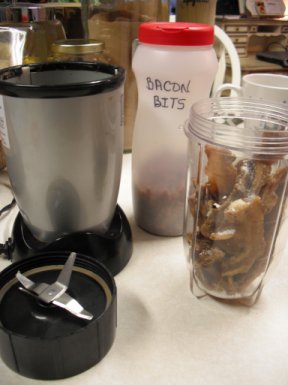
Fry up your bacon until crisp and let it drain out on a paper towel and cool completely. Then put the pieces into a food processor or "Bullet" system as I have here, and process till they are the size you want. Keep in the refrigerator in a container marked "Bacon bits". They will last a long time. You can shake these on lots of different things, including garlic cheese breads or top off casseroles with them. They are very versatile and add just a bit of crunch and taste to any dish you like.
Clean up as you go:
One of the comments I hear the most about why people are reluctant to cook, is "I hate the cleanup!". If you learn to clean up as you go, this will seem like very little bother to you. Looking at a sink or counter full of dishes and pans is depressing and can stop you from cooking on a regular basis.
First, if you have a dishwasher, empty it so it is ready for your cooking session. Put things into it as you use them.
If you don't have one, fill your sink with hot dishwater and have your drainer ready and emptied. As you cook and a utensil or item is not going to be used again, wash it immediately and put it in the drainer. Now the only thing left to do at the end is to put away those clean dishes. No need for hand drying, they will have dried by the time you're finished cooking. If you get into a regular routine of this, the job seems a minor inconvenience compared to ignoring that sink full of dishes waiting to be done.
Wash down your counters and stove as you cook, the job is much easier at the end this way with no dried or baked on splatters to deal with.
Organize your ingredients on your counter in order of use:
Have you ever forgotten an important ingredient in your recipe? Or accidentally used salt instead of sugar? Yep, we've all done it. To prevent this, I now organize my ingredients on my counter by going down the recipe list and lining them up in the order they will be used. As I use them, I check them off with erasable pencil and then I put them away immediately. If they aren't on the counter, I've added it to my recipe.
Kitchen Time Savers:
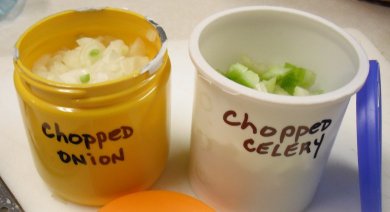
Save yourself time and pre-chop things like onions and Celery.
Keep them in a tightly lidded container in the crisper drawer or freeze them. They'll keep for up to two weeks. Celery gets soft when frozen, but it can still be used in recipes that don't require it crunchy.