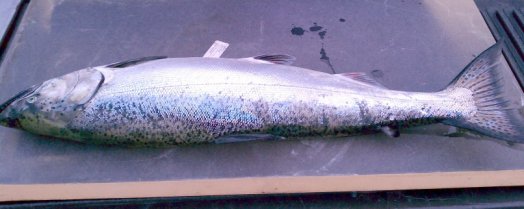
Here we will show you how to fillet the larger fish such as Salmon, Lake trout and Steelhead.
My boss (and usually captain of the Salmon fishing boat) generously offered to be the guide, as he is the fastest filleting dude I know.
The secret to any successful filleting is a good SHARP fillet knife. If you use a dull knife, or a knife that is too small, you will wind up with a torn up fish in addition to some extra hard work.
Fair warning! If you are squeemish or don't care to look at a real butchering process, leave this page.
These are not hand drawn illustrations, it's the real thing.
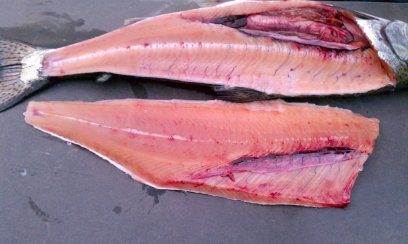
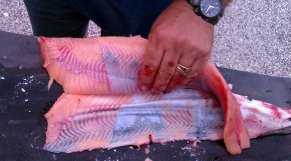
We got a bit interrupted on this final step and wound up with some of the silver skin still on the fillet. If that happens, just take your knife along the silver and shave it off. You want to remove that because it can give an unpleasant "fishy" taste.
When you are done rinse your fillets off very well to remove any blood or scales that may have gotten on the fillet. Remove the pin bones, and cook it up or freeze it. Click Here For instructions on removing the pin bones
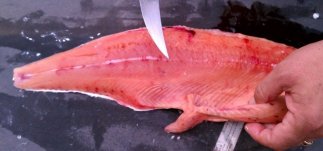
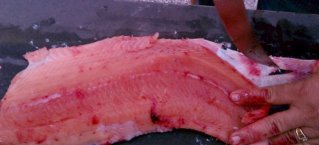
Put your fingers through the hole you've created to hold onto the skin (otherwise it can be very slippery trying to hold it) while you lay the knife flat under the meat and slice away from you. Keep the knife next to the skin, but don't cut into the skin.
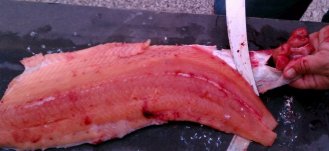
Now cut a small hole in the end, large enough to get your fingers through.
Place the knife between the skin and meat and slice through a few inches while holding the end of the skin.
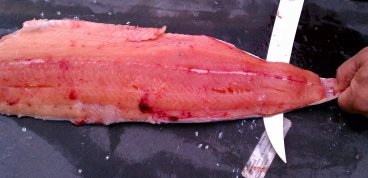
Slice through the meat at the very tip of the fillet. Don't slice through the skin.
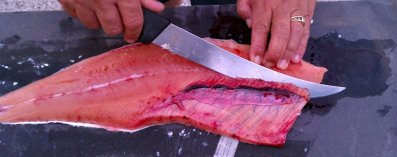
Pull the rib bone section away now.
Remove the rib bone section by placing the edge of the knife just in front of where the bones start, then slice down the length of them. Don't slice all the way through the meat. Keep the knife between the bones and the rest of the meat. You'll be able to feel where the knife is hitting while you slice.
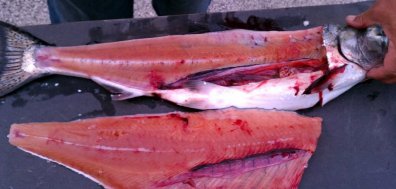
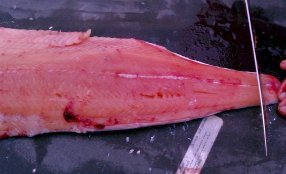
Now you have two fillets. Discard the rest of the fish or use parts for fish stock, whatever you want to do with it. I usually discard it. We will remove the rib bone section next.
Slice down the fillet as you did before, staying just level with the bones. Nice even stroke while holding the other end firmly.
We will not be scaling the fish, the skin is going to be removed entirely.
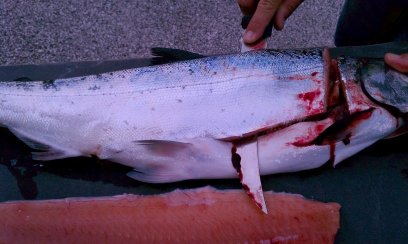
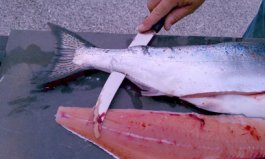
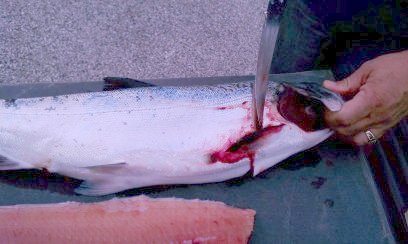
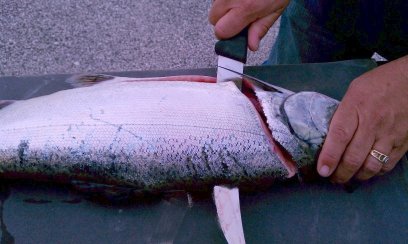
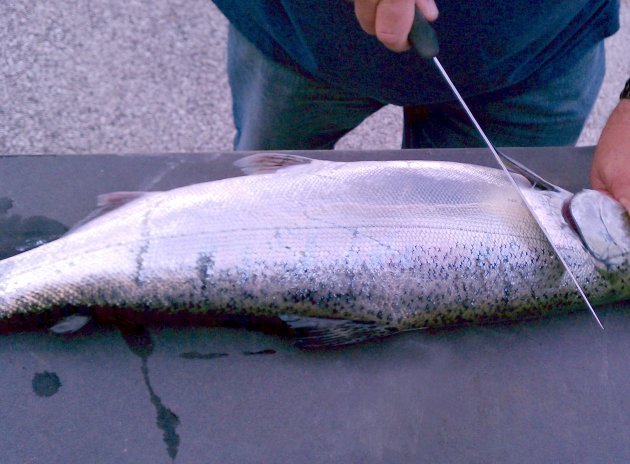
Begin by making a cut just before the Gill plate on one side. Don't cut through the backbone, cut slightly at an angle and just until you hit the bones. You don't want to cut the head off here, just cut through one side.
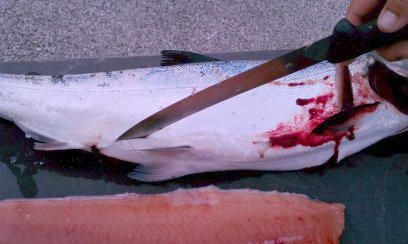
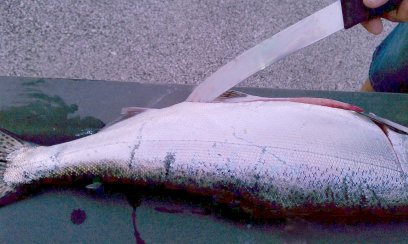
Now slice the fish open starting at one end of your angular cut and going around the first set of belly fins up to the last fin.
Place the edge of your blade into the front until you feel the bone structure. Now you want to work your knife flat between the bones and the meat. The knife should also be against the backbone. Draw your knife down to the tail while holding the fish by the head. Do not hold the gill plate, these are very sharp and can cut you in an instant. Use a slight back and forth sawing motion, but keep the knife against the bones to ensure you are getting the maximum amount of meat from the fish.
Place the fillet to one side and turn the fish over to start the other side.
We will do pretty much the same process on this side. Cut through just before the gill plate.
Slice down the belly to the last fin.
And again, keep the knife between the bones and the meat and slice away from you.
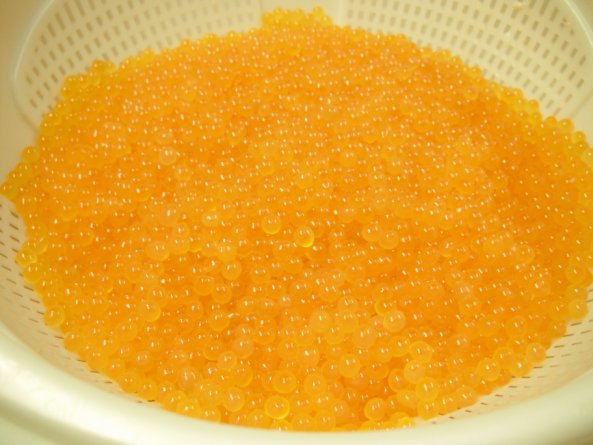
And if you're lucky with your catch you will get more of these....Salmon Roe for Caviar!